Long before Dickens gave the holiday its most famous novella, the stories of Christmas lived elsewhere: in a Gospel narrative, in the raucous customs of midwinter, in church plays staged on hay wagons, and in the figure of a fourth-century bishop whose cult traveled north and changed shape along the way. The history of christmas stories is not a straight line from scripture to fiction. It is a record of borrowing, one tradition absorbing another until the season carried enough narrative weight to hold a book of its own.
The first Christmas story is, of course, the Nativity itself, told in the Gospels of Luke and Matthew. Luke gives the manger, the shepherds, the angels in the fields. Matthew supplies the wise men, the star, and the gifts of gold, incense, and myrrh. Notably, the number three attaches to the wise men by inference alone, because three expensive gifts are named; the text never counts the visitors. That small gap in the record has generated centuries of retelling, which is perhaps the first lesson of the season's literature: the story has always invited completion.
Everything readers associate with the holiday's storytelling, from carols to cards to the figure in the red suit, was settled surprisingly late. According to The History Cooperative, many Christmas traditions of Europe and America were not defined until the mid-19th century, and caroling, card giving, and tree decorating were solidified during that century. What came before Dickens was less a literature than an accumulating folk archive, and it is worth reading on its own terms.
What did the winter solstice contribute to the season's stories?
The oldest layer is pagan. In Scandinavia, the Norse kept Yule for several days beginning at the winter solstice, around December 21. Fathers and sons hauled home large logs and set them burning, and the family feasted until the fire died, which could take as many as twelve days. Each spark, the Norse believed, stood for a pig or calf that would be born in the coming year. That is storytelling of a kind: a ritual narrative about light returning, told in fire rather than ink.
In Germany, the midwinter holiday belonged to Odin, and the feeling was fear rather than cheer. Germans believed he flew through the night sky to observe his people and decide who would prosper or perish, so many stayed indoors. In Rome, Saturnalia ran from the week before the solstice for a full month, a carnival when the social order turned upside down and enslaved people were given temporary freedom. Business and schools closed. These festivals supplied the season's deep plot: the world briefly inverted, the dark held at bay, the ordinary rules suspended. Every later Christmas ghost story and tale of reversal inherits that structure.
When did the Christian story attach to the date?
The Gospels give no date for the birth of Jesus, a fact Puritans later pointed out when they argued against the holiday altogether. The first recorded Christmas celebrating the birth is often cited as A.D. 336, though some evidence suggests observance reaching back to the second century. By the fourth century, church officials had decided to institute the feast, and Pope Julius I chose December 25. The common reading is that the church picked the date to adopt and absorb the pagan Saturnalia, first calling the feast the Feast of the Nativity. The custom reached Egypt by 432 and England by the end of the sixth century.
A monk named Dionysius Exiguus, working in Rome, fixed the birth to December 25 in the Western calendar, and despite later disputes the date stuck. The bargain the church struck, however, had a cost worth noting. By holding the feast at the same moment as the solstice festivals, leaders made Christmas popularly embraced but gave up the ability to dictate how it was celebrated. The medieval result was a church service followed by something like Mardi Gras.
How did medieval Europe tell the Christmas story?
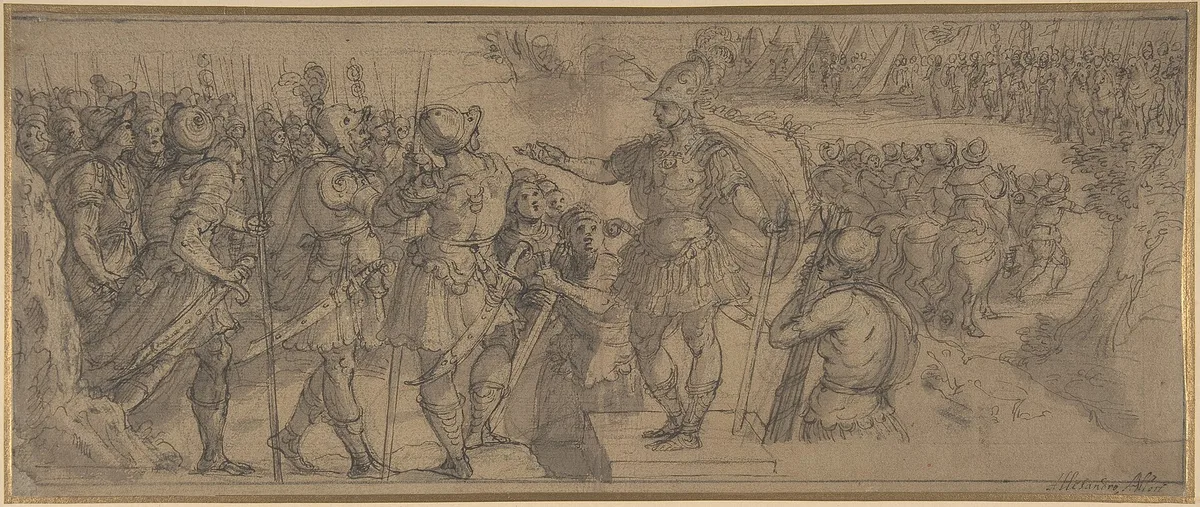
By the Middle Ages, Christianity had largely replaced pagan religion, and the season's storytelling moved into performance. Believers attended church, then celebrated in a drunken, carnival-like atmosphere. Each year a beggar or student was crowned the "lord of misrule," and celebrants played the part of his subjects. The poor went to the houses of the rich to demand their best food and drink, and if the owners refused, the visitors answered with mischief. Christmas became the time when the upper classes could repay a real or imagined debt to society by entertaining the less fortunate, a social script that would later surface in fictional form again and again.
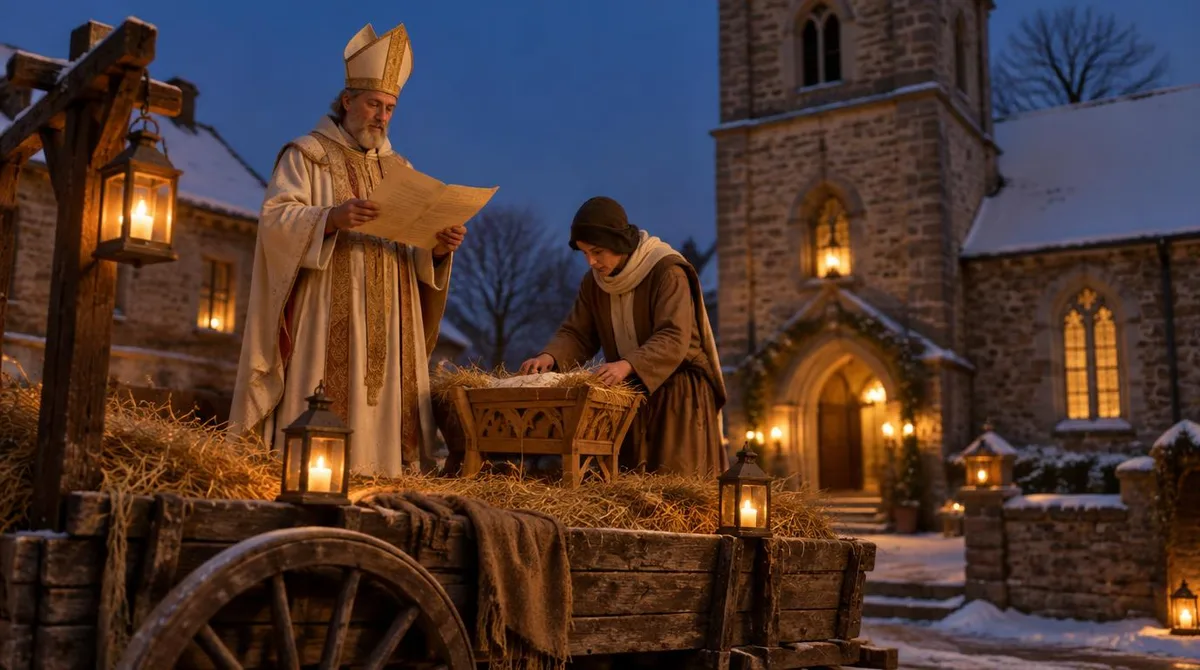
The Nativity narrative itself took theatrical shape. Through the Middle Ages, Christmas was kept with feasting, singing, and plays, staged in churches and also in castles and marketplaces, where a big hay wagon sometimes served as a stage. These performances were the season's popular literature, retelling Luke and Matthew for audiences who could not read them. The same story also circulated in carved stone; sarcophagi from the era of Constantine, who made Christianity a legal religion, already carried images of Mary, the infant Jesus, and the wise men. The visual tradition that would later fill cribs and creches, the models many Christians build of the scene, began in sculpture long before it reached the printed page. For more on how sacred narrative survived in handmade books, see Why Illuminated Manuscripts Still Matter and How Monasteries Saved Books.
Where did Santa Claus's story come from?
The season's most durable character has a biography of his own, and it is a study in narrative migration. Nicholas was born in Parara, in what is now Turkey, in 270 CE, became a bishop, and achieved cult status after his death. In 1087, sailors enshrined his bones in a sanctuary in Italy, replacing a local benevolent deity known as "The Grandmother," who filled children's socks and stockings with gifts. His cult kept his feast on December 6 and spread north, where his figure merged with Woden, the chief god of Germanic tradition. Nicholas lost his Mediterranean look and gained a long white beard, a winged horse, and cold-weather clothing.
Then the character nearly vanished and returned by way of literature. It took Washington Irving's Knickerbocker History of 1809, a satire of Dutch culture, to bring a white-bearded, horse-flying St. Nick back into popular culture. Less than twenty years later, Clement Clarke Moore, a Union Seminary professor, read Irving and penned "Twas the Night Before Christmas." The pamphlet poem did what no sermon had managed: it fixed the figure, the sleigh, the chimney, and the quiet domestic magic of the night before, in verses a child could memorize. In a real sense, the modern Christmas story begins in a comic history and a poem for children, not in a novel.
What this means for readers
Our analysis of the record suggests a simple conclusion. The holiday's literature was assembled, not inherited. The Gospels supplied the core narrative; the solstice festivals supplied the plot of reversal; the medieval church supplied the stage; and the nineteenth century, working through Irving, Moore, and eventually Dickens, supplied the printed forms readers now take as timeless. The Puritans, who refused the feast because scripture named no date for it, were wrong about the holiday but right about its hybrid origins, and even they left a mark on the story. The word "yule" itself entered the Christian vocabulary only in the 11th century, carried by converted Saxons, a reminder that the season's language is as layered as its tales. Before the 4th century, Christians could only worship in secret; the stories that survived did so by adapting to the calendars, gods, and customs around them. That adaptability, more than any single author, is what Dickens inherited. Readers who want the wider context of the feast's religious meaning can begin with the culture section, where the season's art and music get their own histories.