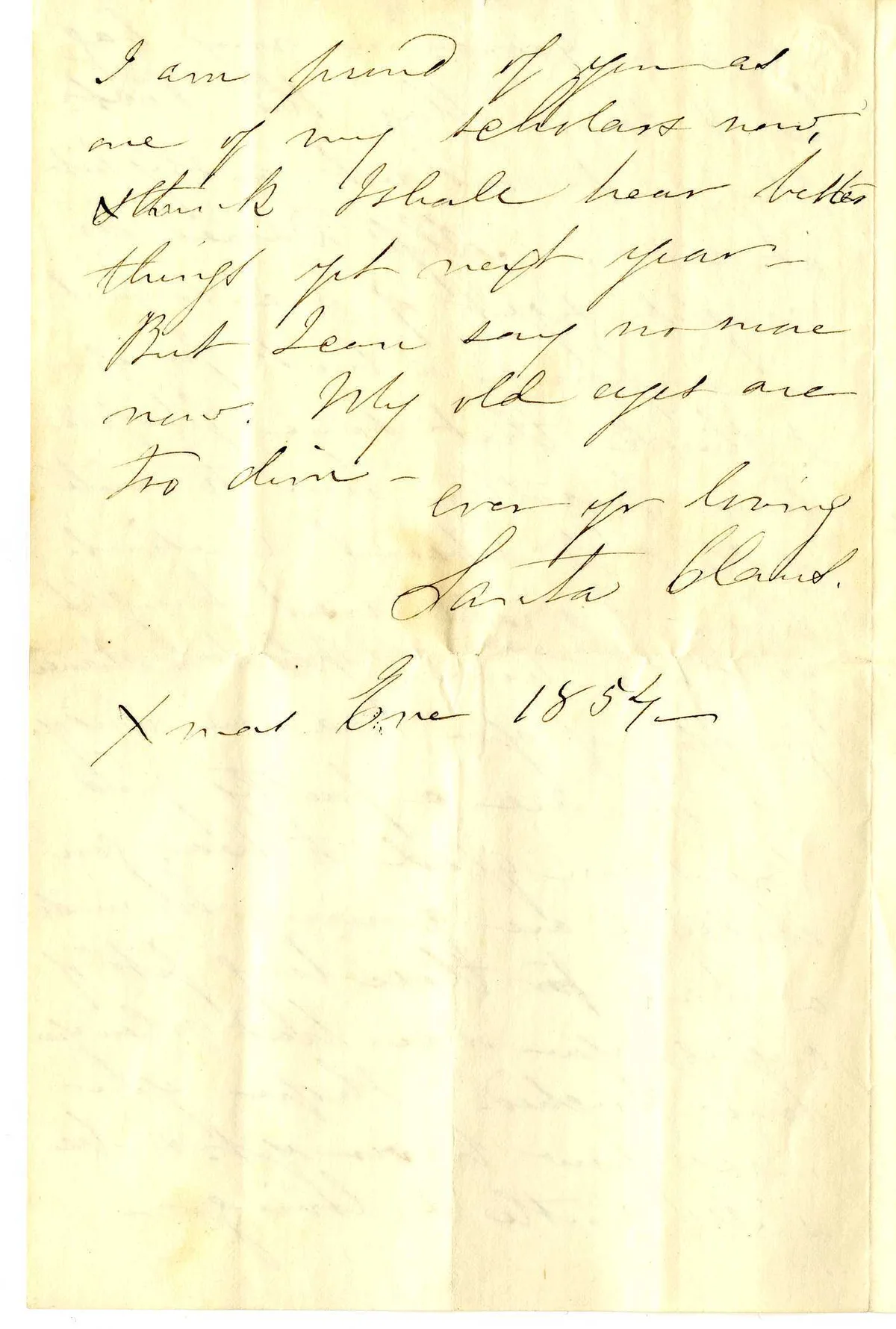
Most letters addressed to Santa Claus do not go to the North Pole. They go to sorting rooms, post offices, and volunteer-run websites, where adults — postal workers, parents, strangers with spare evenings — read them and write back. The magic survives the trip because the reply is careful, not because the address is real.
That is the short answer. The longer one is worth reading, because the journey of a child's letter tells you something about why people keep answering them, and what the letter itself has become: one of the last forms of writing children produce without being asked to.
This piece follows the letter from the moment it leaves the house to the moment a reply comes back, and looks at what happens in between. If you are planning to write one yourself, our guide on how to write a letter to Santa your kid will treasure covers the craft side; here we are interested in the mail stream itself.
Where does a letter to Santa actually go?
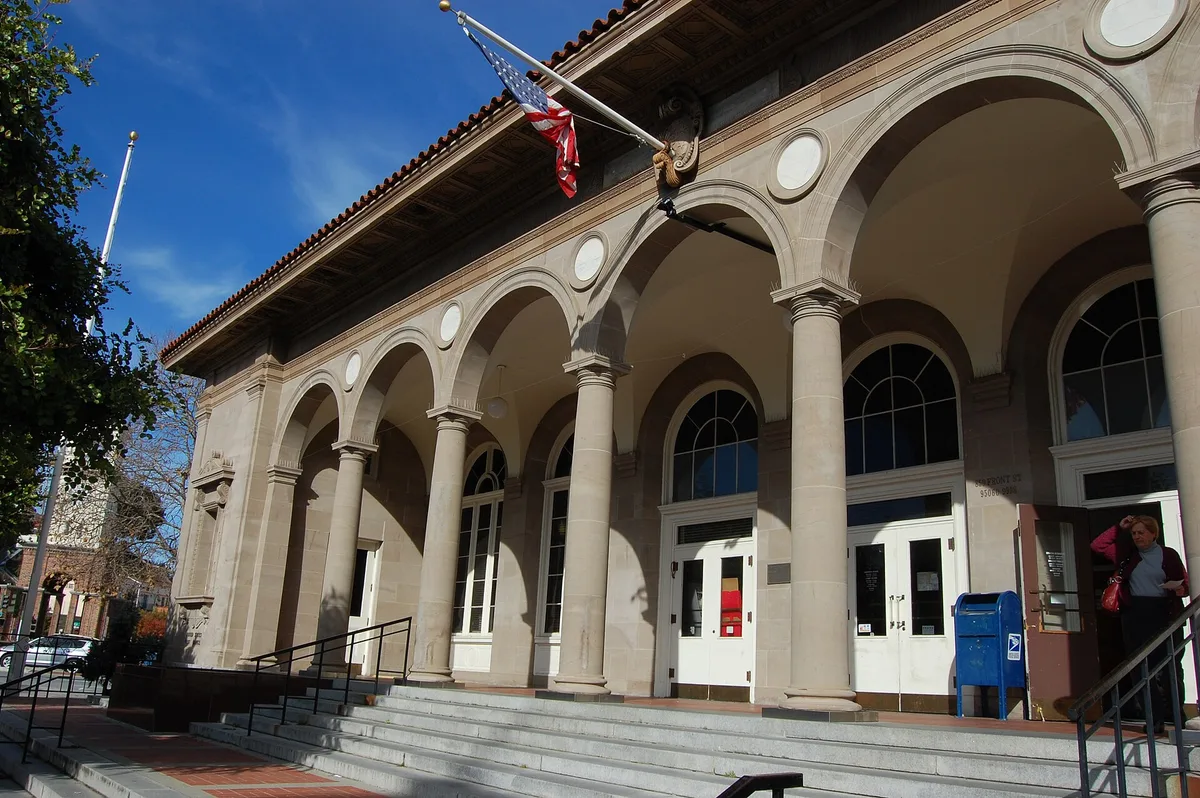
In most countries, postal services treat mail addressed to Santa as a special category rather than a delivery failure. A letter with "North Pole" on the envelope is undeliverable in any literal sense, so it is routed instead to a handling point — often a dedicated program run by the national post, staffed largely by volunteers — where it is opened, read, and answered. The details differ from country to country, and this article does not name specific programs beyond what our sources describe, but the pattern is old and remarkably stable: an institution agrees to stand in for the legendary address.
The same pattern has moved online. According to Wikipedia's overview of Santa Claus traditions, many websites devoted to Santa use volunteer "elves" — living people — to answer the email children send, while some have relied on automated bots to compose replies, occasionally with awkward results. The volunteer model is the one that works; a reply that reads like a form letter breaks the spell faster than no reply at all.
There is even a documented case of a website born from a postal failure. Wikipedia records that emailSanta.com was created in 1997, when a Canada Post strike prevented a man's young niece and nephews from sending their letters; within weeks the site had received over a thousand emails, and a year later it was receiving roughly a thousand a day. The infrastructure of Santa's mail is, in other words, improvised, human, and surprisingly resilient.
Why do adults answer these letters?
The honest answer is that the letters are good to read. A child's letter to Santa is a small genre with its own conventions — the polite opening, the inventory of wants, the occasional unprompted confession, the P.S. that asks after the reindeer. Volunteers and postal staff who answer them are reading, in effect, a folk literature that renews itself every December.
There is also an ethic underneath it, and it has deep roots. The figure of Santa descends from Saint Nicholas, a fourth-century bishop remembered for secret gift-giving to the poor — coins left in shoes set out overnight. As HISTORY's account of Santa's origins notes, that reputation for quiet, unadvertised generosity is the historical seed the legend grew from. Answering a child's letter is a continuation of the same gesture: a kindness performed without expecting credit, by someone the child will never meet.
Our analysis: the reply is where the tradition actually lives. The sleigh and the chimney belong to legend; the answered letter belongs to charity, in the old sense of the word. That may be why postal systems around the world have taken on the work without being asked to — it is a small, annual act of institutional grace.
Who invented the Santa children write to?
The Santa of the letters is a literary creation, assembled in nineteenth-century New York. HISTORY credits Clement Clarke Moore, an Episcopal minister, whose 1822 poem "A Visit from St. Nicholas" — better known by its first line, "'Twas the Night Before Christmas" — gave Santa his portly figure, his sleigh, and his eight flying reindeer. In 1881, the cartoonist Thomas Nast drew on Moore's poem in Harper's Weekly to produce the first image matching the modern Santa: rotund, white-bearded, red-suited, workshop at the North Pole, elves in attendance.
This matters for readers because it means the letter-writing tradition is anchored in texts. Children write to a character who came out of a poem and a set of engravings, and every reply they receive is a small act of collaborative fiction — the adult on the other end agreeing, for one letter, to inhabit a figure two writers built nearly two centuries ago. The tradition has kept expanding through new media ever since; Rudolph, for instance, was invented in 1939 by a department-store copywriter, Robert L. May, for a Montgomery Ward promotional booklet.
What happens when the reply is a machine?
Not every reply is written by hand, and the difference is felt. Wikipedia's account notes that some Santa websites have used bots to generate responses, with what it calls occasional unfortunate results — a machine cannot notice that a child has asked a second question, or that the letter is sadder than its wish list lets on. The letters that children and parents remember are the ones that read as though someone actually read them.
This is a useful test for any parent or volunteer drafting a reply: specificity is the proof of attention. A reply that names the child's own words — the spelling of the pet's name, the promised cookies — does more work than any official seal. We have more on the craft of the reply and the letter in our guide to writing a letter to Santa.
What this means for readers
Santa Post is a magazine about reading, and it is worth saying plainly what kind of reading this is. The letter to Santa is often a child's first independent composition — a text written to an imagined reader, in a borrowed voice, with real stakes. It belongs in the same conversation as the other first texts of a reading life: the psalms learned by heart, the bedtime book requested for the fortieth time. If you are building a household around books, our piece on a family reading ambience routine treats December mail as part of that texture rather than an interruption of it. Readers following this should also see Building a Family Reading Ambience Routine.
The wider culture section of this site covers culture and the literary calendar year-round, and the Santa letter earns its place there: a vernacular genre, millions of copies produced annually, almost none preserved, all of them sincere.
So where do the letters really go? To people. Sorting clerks, volunteers, parents with a good pen. The North Pole is a literary address; the reply comes from somewhere better — a desk, in December, where a stranger decided the legend was worth keeping alive for one more reader.