Walk into almost any church choir rehearsal, open a book about sacred music, or listen to a modern recording of liturgy, and you will hear the shadow of one tradition. Gregorian chant keeps shaping how sacred music is written, sung, and understood. A form of song from the ninth and tenth centuries still holds that much influence.
That is worth explaining. Chant is not remembered because it is old. It endures because of what it does, and because of how it was built.
What Gregorian Chant Is
Gregorian chant is the central tradition of Western plainchant. It is monophonic, unaccompanied sacred song, sung in Latin and occasionally Greek, for the Roman Catholic Church. It developed mainly in western and central Europe during the ninth and tenth centuries, with later additions and redactions. This connects to our earlier piece, Why Islamic Calligraphy Became Sacred Art.
It was traditionally sung by choirs of men and boys in churches, or by women and men of religious orders in their chapels. It is the music of the Roman Rite, performed in the Mass and the monastic Office.
The Name Is a Legend
Popular legend credits Pope Gregory I with inventing the chant. Scholars believe he only ordered a compilation of melodies from the whole Christian world. Most of the melodies we have are a later Carolingian synthesis of the Old Roman chant and Gallican chant.
So the name is more like a brand than a birth certificate. The repertory was gathered, copied, and refined over generations. That slow, collective making is part of why it sounds the way it does: nothing in it is showing off, and everything in it serves the words.
A Grammar That Trained Western Music
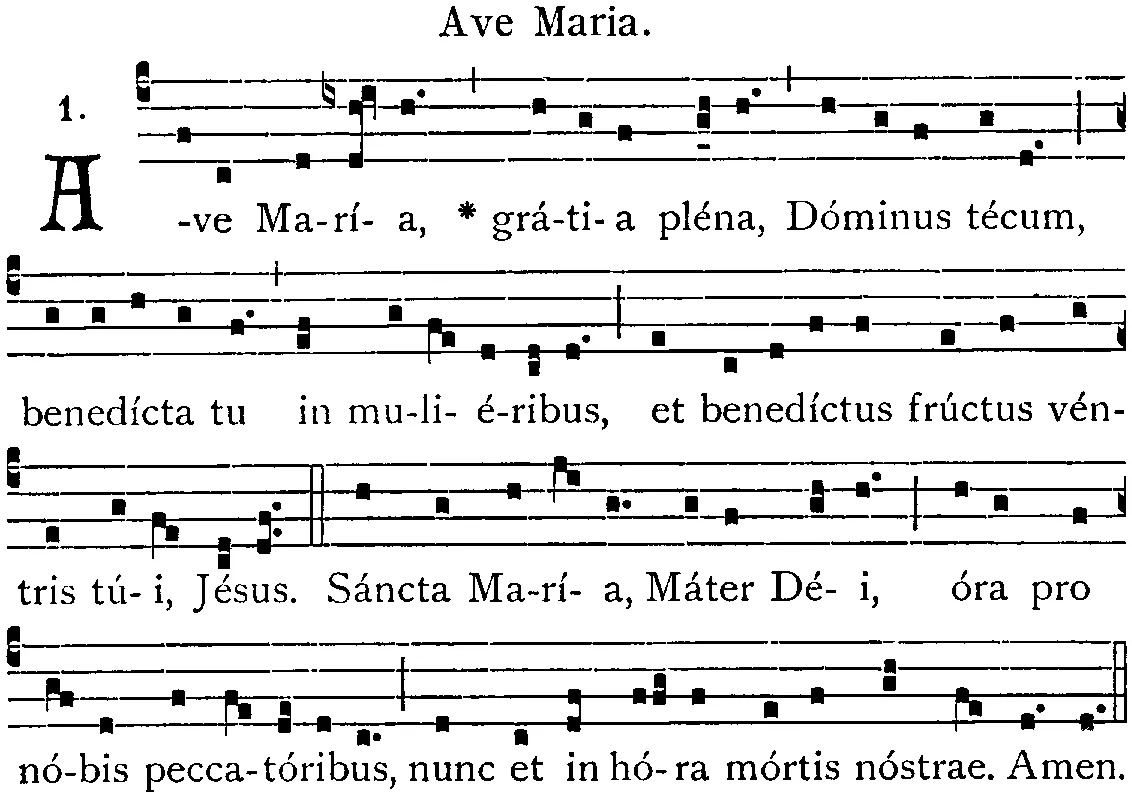
Chant has a structure, and that structure taught the West to sing. The chants were organized into four modes at first, then eight, and finally twelve. Their melodies were traditionally written in neumes, an early form of musical notation from which the modern four-line and five-line staff developed.
The influence runs deeper still. Multi-voice elaborations of chant, known as organum, were an early stage in the development of Western polyphony. Harmony in Western music has chant in its family tree, and every music student still learns the note staff it left behind. For related coverage, see Why Illuminated Manuscripts Still Matter.
Why the Church Never Let Go
Chant did not just survive alongside its rivals. It supplanted or marginalized the other indigenous plainchant traditions of the Christian West to become the official music of the Christian liturgy. Ambrosian chant still continues in use in Milan, but nearly everywhere else, chant became the sound of worship.
Even now, although Gregorian chant is no longer obligatory, the Roman Catholic Church still officially considers it the music most suitable for worship. That is a remarkable status for music without instruments at its core.
What It Means Today
For anyone writing or choosing sacred music, chant still sets the baseline. It shows that music for worship can be simple, unhurried, and text-driven. It proves that a choir does not need volume to fill a room, only line and balance.
Listen to it slowly and its habits appear: the way a melody circles around its tones, the way phrases rise and fall with the words. Those habits are still what people expect sacred music to sound like, even when they have never heard the word plainchant.
Conclusion: The Quiet Standard
Gregorian chant still shapes sacred music because it built the grammar, won the central role, and kept the endorsement. It gave Western music its notation, its modes, and its first steps toward harmony. It remains the official reference point for worship in the Roman Catholic Church. Nine centuries on, the quiet standard still holds.