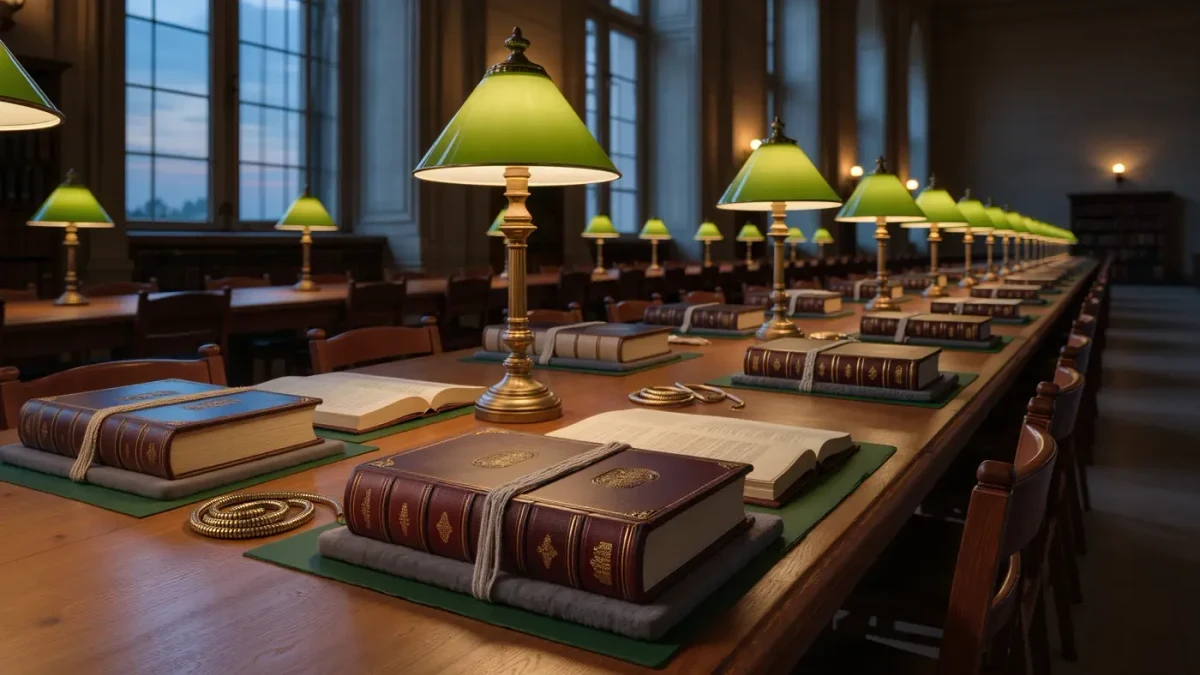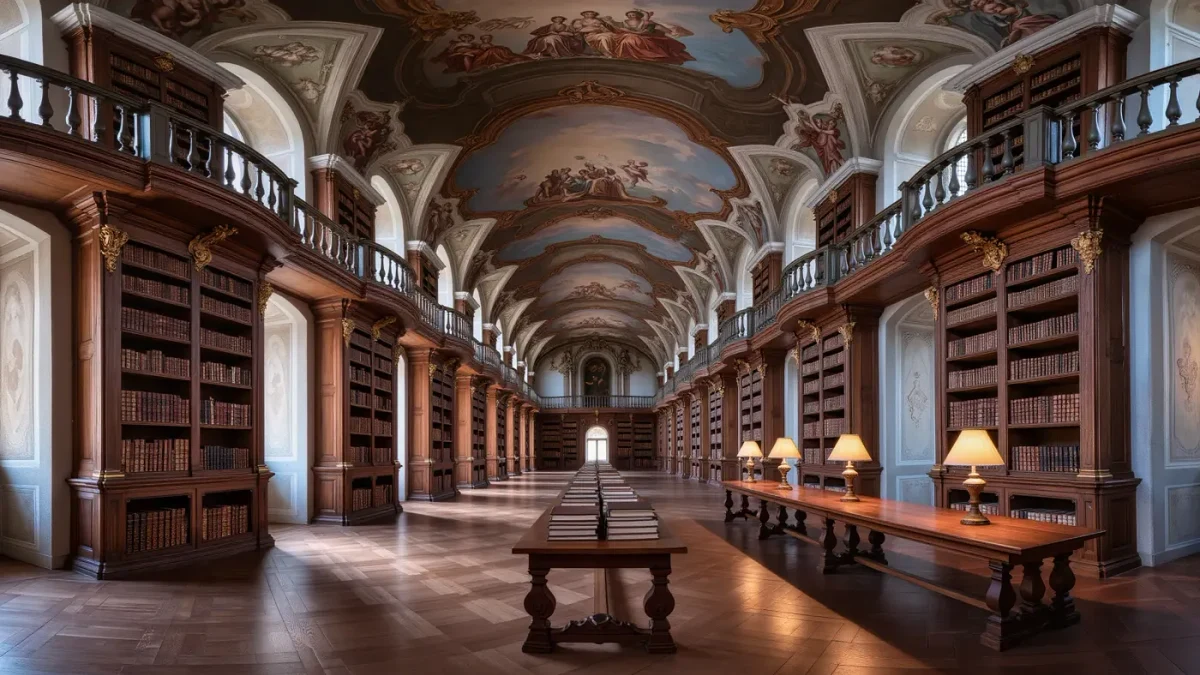
This is how monasteries saved books: by making copying a religious duty. Cassiodorus founded Vivarium in the 550s and told his monks to transcribe scripture and pagan classics; the Rule of Saint Benedict made reading obligatory; the Carolingian scriptoria copied at such scale that most surviving Latin literature descends from their parchment. The saving was partial and unintentional.
What Did Cassiodorus Do?
He moved the library into the monastery. Cassiodorus (c. 485 — c. 580), an official of the Ostrogothic court, withdrew and founded Vivarium on his estate at Squillace, in Calabria. Its program, set out in his Institutiones, required monks to read Scripture with the liberal arts — and, pointedly, to copy books, secular authors included, preaching with the hands.
The move sounds administrative and was anything but. Antiquity had kept its books in the hands of an educated elite tied to cities, schools and the imperial service; as that world contracted in the West, Cassiodorus gave the copying of Cicero and Aristotle's logic a permanent institutional home among people whose vocation theoretically had nothing to do with them. Vivarium itself did not long outlast its founder as a center. The idea did: a monastery that reads must own books, and a monastery that owns books must replace them.
What Does the Rule of Saint Benedict Say About Books?
Directly, almost nothing about copying — and everything about reading. Chapter 48 of the Rule, composed in the first half of the sixth century, declares idleness the enemy of the soul, assigns fixed hours for reading alongside manual labor, and orders each monk a book from the library for Lent. The scriptorium grows from the library as consequence, not command.
The Rule was written for Monte Cassino, Benedict's own monastery. That is the honest version of the story, and it is worth keeping, because the romantic image of monks heroically copying Tacitus through the Dark Ages is a later embellishment. Most monastic copying, most of the time, was of Bibles, psalters, liturgical books and the fathers of the church — the community's own working needs. Classical texts were copied when they fit study, grammar and the curriculum Cassiodorus had recommended. The accident of survival is built on top of that routine, not instead of it.
What Was the Carolingian Correction?
A campaign of proofreading at imperial scale. Around 785, Charlemagne's circle sent monasteries the letter known as De litteris colendis, urging schools and accurate texts; under Alcuin of York (died 804), the abbey of Saint-Martin at Tours became the engine of corrected Bibles and revived classics, in the new bookhand called Carolingian minuscule.
That bookhand is the ancestor of our lower-case letters, transmitted through Renaissance humanists who took it for ancient Roman script. The correction mattered as much as the copying. Texts that had drifted through centuries of casual transcription were collated against whatever older exemplars could be found, and the corrected recensions then multiplied through affiliated houses. The great bulk of surviving Latin literature descends from eighth- and ninth-century copies of this program. Two examples make the point concrete: Lucretius' De rerum natura reaches modern readers through two ninth-century manuscripts preserved at Leiden, and the first six books of Tacitus' Annals survive in a single ninth-century codex now in Florence. Whole works hang by such threads.
What Actually Survived — and How?
A fraction, through chains of copies restarted every generation or two. Parchment is durable but not immortal: ink fades, books burn, libraries are looted, and a manuscript nobody copies for three centuries has silently died. The monastic chain was the strongest single line of transmission in the Latin West — but never the only one.
Cathedral schools, and beyond Europe the Byzantine and Islamic worlds, transmitted and translated what the West neglected. The losses were also manufactured. Parchment was scarce, and older books were scraped clean and overwritten — palimpsests — which destroyed as it preserved; the most famous recovery is the Archimedes Palimpsest, a tenth-century copy of the mathematician overwritten by a prayer book in 1229 and read again by modern imaging. And selection was ruthless: Christian texts were copied overwhelmingly, secular literature only opportunistically. The honest summary is that monasteries did not set out to save civilization's library. They set out to run their own, and the wreckage of antiquity washed up in it.
Frequently Asked Questions
Answers to the questions readers ask most about monastic book culture: whether everything ancient was saved, what a scriptorium was, why pagan authors were copied at all, and whether the libraries can still be visited. Each compresses the account above. The visiting answer names one place worth the trip.
Did monks really save all the ancient books?
No. They saved a fraction, and the selection skewed heavily toward Christian texts. Most ancient writing — whole genres, most Greek science, the Latin literature of many centuries — is simply gone; what survives often hangs on one or two medieval copies.
What is a scriptorium?
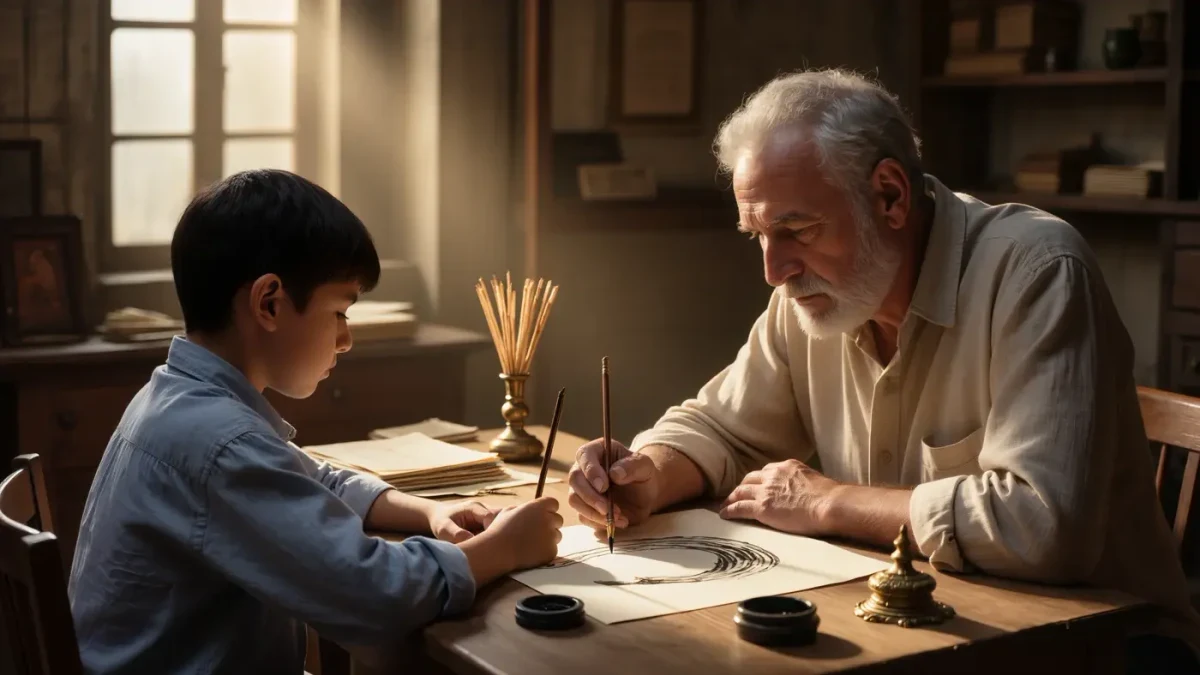
The writing room of a monastery, where copies were made by hand — dictation in some houses, silent copying in others, with rubricators and illuminators finishing the pages. The word also names the organized work itself, which peaked in some houses at specific seasons.
Why did monks copy pagan authors?
Because their curriculum needed them: grammar and rhetoric were taught from the classical authors, and Cassiodorus had made the liberal arts preliminary to scripture. Utility, habit and reverence worked together; nobody planned a rescue.
Can you visit a monastic library today?
Yes. The abbey library of Saint Gall in Switzerland, in its eighteenth-century rococo hall, keeps manuscripts from the Carolingian era and earlier and is open to the public — one of the few places where the chain of copying is visible as a place.