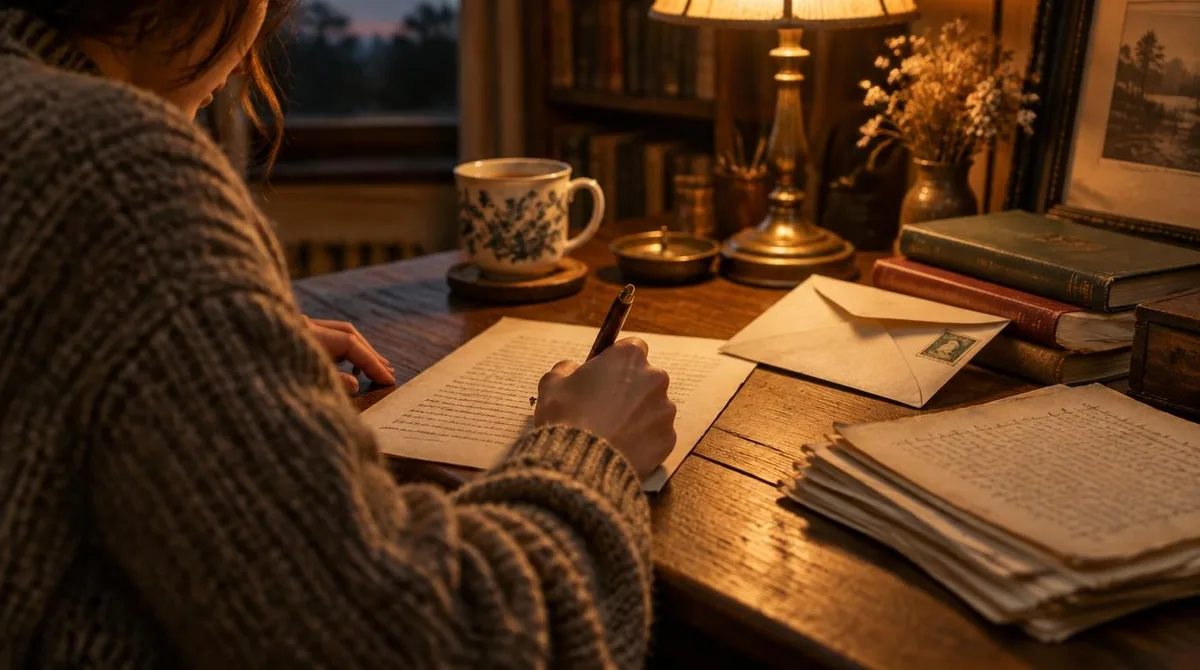
The letter is the oldest form of writing that pretends not to be literature. It was written for one reader, about ordinary things, in the writer's own unguarded voice — and that is exactly why it became one of literature's most durable shapes. When novelists wanted realism, they borrowed the letter. When essayists wanted intimacy, they did too. Understanding letter writing as literature means seeing that the envelope was never just delivery; it was a frame.
The claim can be stated plainly. A letter gives us a person thinking in real time, without the smoothing hand of a narrator looking back. That quality — immediacy, subjectivity, the sense of eavesdropping — is what the epistolary form offers, and it is why the letter keeps reappearing wherever prose wants to feel true. The form's history runs from the first English novels told entirely in letters to books that use emails, diary entries, and text messages today. This connects to our earlier piece, Bonhoeffer: Letters and Papers from Prison.
According to Literary Devices, the word "epistolary" comes from the Latin epistola, meaning letter, and an epistolary work is a story told through letters, diary entries, or other documents presented as correspondence — the letters are not decoration; they are the story itself. That distinction matters. A novel that merely contains a letter is doing something normal. A novel made of letters has handed the whole narrative over to the character's own hand, with all the bias, blind spots, and urgency that come with it.
Where did the epistolary form come from?
The letter as a written genre predates the novel. As Oregon State University's literary guide explains, when novels emerged in Europe in the sixteenth and seventeenth centuries, authors commonly folded letters into their narratives to let characters speak in their own voices, which added realism and psychological insight. The first novel in English composed entirely of letters is usually credited to Love Letters Between a Nobleman and His Sister, published in 1684 and attributed to Aphra Behn. Because Behn's fictional characters were modeled on real people, the letter form made readers feel they were reading a private correspondence they had no right to see. That thrill of trespass is part of the form's engine, and it has never left.
The form's real breakthrough came with Samuel Richardson. His Pamela, or Virtue Rewarded (1740) told its story through the letters of a young servant girl writing to her parents, in what Richardson called a "familiar" style — informal, domestic, the voice of a daughter at home. A decade later, Clarissa (1748) went further, giving readers not only the heroine's letters but also those of Lovelace, the man pursuing her. Two perspectives on the same events, both written by interested parties, and the truth somewhere between them. Richardson called his method "writing to the moment": characters recording thoughts as they happen, in something like real time. It made the novels enormously popular and set off a vogue. As the Oregon State account notes, both the first Canadian novel, Francis Brooke's The History of Emily Montague (1769), and the first American novel, William Hill Brown's The Power of Sympathy (1789), were epistolary. The new literatures on two continents both chose the letter first.
What does the letter do that narration cannot?
Three things, mostly. First, subjectivity. We only know what the writer knows, and the writer may be wrong, deceived, or lying. Second, intimacy: letters are private communications, so reading them feels like being trusted — or intruding. Third, delayed information. The reader learns things when the characters do, or sometimes knows more than any single character, which builds suspense without any narrator announcing it.
Tobias Smollett showed how far the form could stretch. His The Expedition of Humphrey Clinker (1776) gives one trip through the letters of a whole traveling family — the patriarch, his sister, his niece, his nephew, and the maid. The patriarch finds the spa waters at Bath disgusting; his niece finds them charming. The reader has to decide where the truth lies by weighing the accounts. In the Oregon State reading, Smollett turns private family correspondence into a kind of technology for assembling a whole nation out of clashing viewpoints. That is the quiet ambition of the form: many voices, no referee.
Why did the epistolary novel fall out of fashion — and come back?
By the start of the nineteenth century, the epistolary novel had faded; omniscient narration offered more control. But the form kept resurfacing wherever a writer needed documents to do the believing. Mary Shelley framed Frankenstein (1818) with letters from Robert Walton, an explorer in the Arctic, writing to his sister — so the whole horrific story arrives inside another person's correspondence, a nesting of perspectives that adds distance and doubt. Bram Stoker pushed the form to its limit in Dracula (1897), assembling the novel from letters, diary entries, newspaper clippings, telegrams, and dictation cylinders — the newest recording technologies of his day. The reader, holding all the documents, often knows more than any character, and the dread comes from watching them fail to piece it together.
The twentieth and twenty-first centuries kept the habit. C.S. Lewis's The Screwtape Letters (1942) is a single one-sided correspondence — a senior devil instructing a junior — which forces the reader to infer the human victim entirely from the predator's advice. Alice Walker's The Color Purple (1982) gives Celie's life through letters written first to God and later to her sister Nettie, raw and unpolished, so the reader witnesses her transformation in her own words. And the form has simply absorbed new media: emails, chat logs, blog posts, and text messages now do the work the sealed letter once did, as novels like Julie Schumacher's Dear Committee Members show by building a whole satire out of recommendation letters and emails.
What this means for readers of spiritual writing
Here is where the letter matters most for a reader of religious literature. Prayer journals, prison letters, and spiritual correspondence are epistolary by nature, and their power comes from the same qualities the novelists exploited: no narrator's hindsight, no tidied conclusion, the writer caught mid-doubt. The letter is the natural habitat of unfinished belief. Bonhoeffer's Letters and Papers from Prison endures because it is correspondence — questions written to particular people, not positions written for the public. Flannery O'Connor's A Prayer Journal works the same way: a private document never meant for us, which is precisely why it reads as honest. C.S. Lewis's A Grief Observed was published under a pseudonym originally, and its notebook form keeps grief at the pitch of the moment rather than the shape of an argument. Readers following this should also see Flannery O’Connor: A Prayer Journal.
Our analysis is this: the epistolary form survives because it solves a problem every honest writer faces — how to describe an inner life without pretending it is already resolved. The epistolary novel's tricks (subjectivity, unreliability, multiple voices) are not gimmicks; they are a realistic picture of how people actually know things, partially and late and through their own filters. That is also why spiritual reading keeps returning to letters and journals. A summa argues. A letter reaches.
Why the letter still shapes prose
The brief history above suggests an answer. The letter taught prose to sound like a person. Before Richardson, novels leaned on omniscient narrators; after him, the first-person voice, the diary novel, the confessional essay, and eventually the email novel all existed as options. The letter normalized the idea that a text could be intimate, partial, and dated — written from one moment to a specific other — and still be art. It also normalized the reader's strange position: a confidant who was never meant to exist.
That position has a moral edge worth naming. Reading someone's letters, even fictional ones, is a small practice in humility. You get the writer's side only. You must weigh it against other letters, other voices, your own suspicion. The best epistolary books — Clarissa, Dracula, The Color Purple — train exactly that muscle. They refuse to hand you a finished truth and instead make you an active judge of testimony. In an age of feeds and forwarded messages, that may be the form's most useful legacy: it teaches reading as discernment.
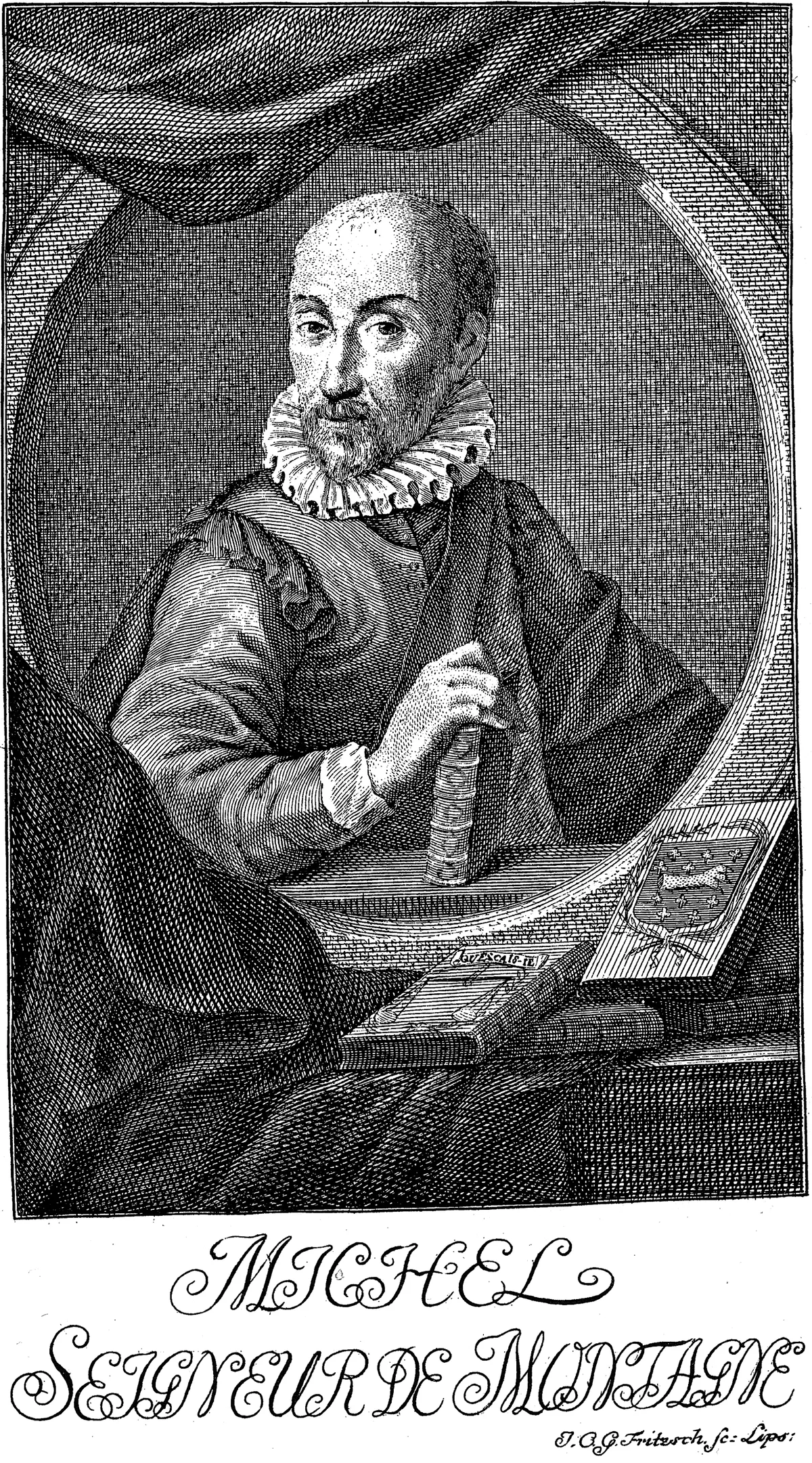
The letter's afterlife is easy to see on the shelf. Collections of correspondence are published and read as literature in their own right, and the essay itself has always borrowed epistolary habits — the direct address, the single recipient implied behind every paragraph, the willingness to leave a thought mid-development. Anyone interested in how the personal essay earned its intimacy can trace one line back through the confessional essay and another through the essay tradition Montaigne started; the letter sits behind both, quietly setting the terms. What the evidence establishes is the form's persistence and its adaptability — from sealed wax to sent text. What remains genuinely unknown is whether writing that arrives instantly, to many readers at once, can keep the particular weight the letter carried: one voice, one addressee, no take-backs. The old form at least leaves us the question, which is more than most forms manage.