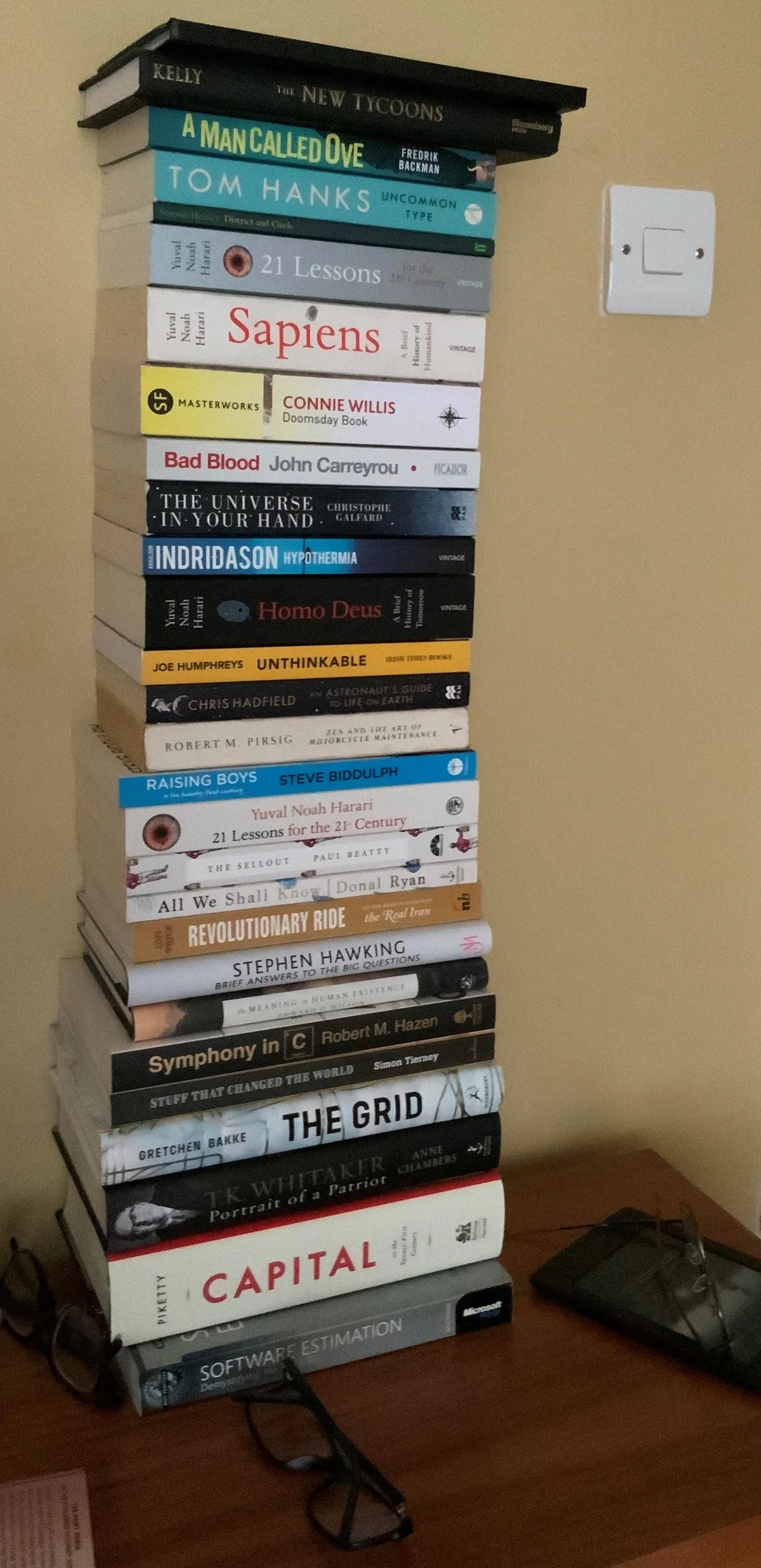
Everyone has the shelf. The novels a friend recommended. The classic everyone says you must read. The book bought on holiday and never opened. We keep acquiring books we do not read, and the pile never quite goes away.
The habit is old, and it has a name. It also has a defense, and a surprisingly good one.
There Is a Word for That Pile
The Japanese call it tsundoku: acquiring reading materials and letting them pile up in a home without reading them. It also describes the unread books on a bookshelf, kept there to be read later. The term goes back to the Meiji era, between 1868 and 1912, where it began as slang. It combines elements of the term tsunde-oku, meaning "to pile things up ready for later and leave", with the term dokusho. Readers following this should also see How to Edit Your Own Essays Without Cringing.
The feeling is not new either. The American author and bibliophile A. Edward Newton commented on a similar state in 1921. The Canadian poet Robert W. Service remarked on the phenomenon in his poem Book Lover. If books have been piling up unread for at least a century, the guilt can probably wait. This connects to our earlier piece, What We Mean by Spiritual Reading.
Why We Keep Doing It
An unread book is not a failure. It is a decision about who you intend to become. We buy the big biography because we want to be the kind of person who has read it. We keep the inherited novels because giving them away feels like a small betrayal of the person who left them.
So the pile grows with every move, every inheritance, every good intention. That is not disorder. That is aspiration, shelved.
Notice, too, what the pile is not. It is not a to-do list handed down by anyone else. It grew from your own curiosity, one book at a time. A habit that begins in curiosity deserves better than a shrug of shame.
The Antilibrary Argument
The best-known defense of unread books comes from Umberto Eco, who coined the term antilibrary. The writer Nassim Nicholas Taleb popularized it in his 2007 book The Black Swan. Eco used the term to characterize Jonathan Swift's description of a library in Gulliver's Travels, and the idea has been compared with tsundoku.
The point of the antilibrary is that unread books have their own value. A shelf you have fully exhausted teaches you nothing new. A shelf of unread books is a map of what you do not yet know, which is exactly what a curious reader needs most.
Make Peace With the Pile
None of this means you should keep everything. It means the guilt is misplaced. Sort the pile into honest groups: the books you truly intend to read, the books you keep for love, and the books you keep only out of habit. The last group can go to a new home.
Then pick one book from the first group and start it tonight. The pile exists to be read later, and later has to arrive sometime.
There is a quiet trust inside the habit as well. Keeping a book you have not read says that you expect your taste to grow, and that you believe the right week will come. That is not arrogance. It is patience, and patience is a rarer trait than finishing books.
Conclusion: Unread Books Are Not a Debt
We keep inheriting and acquiring books we never read because shelves hold intentions as well as objects. There is even an old word for it, and a serious argument that the unread books matter most. Treat the pile as a map, not a debt. Keep what points somewhere, release the rest, and start one of the others before the week is out.