“The Grand Inquisitor” is a chapter of The Brothers Karamazov, serialized in 1879–80, in which the skeptic Ivan tells his brother Alyosha a “poem” set in Inquisition Seville. Christ returns, is arrested, and a cardinal spends the night explaining why the church had to reverse his work. The question is whether people can bear freedom.
What Happens in the Chapter?
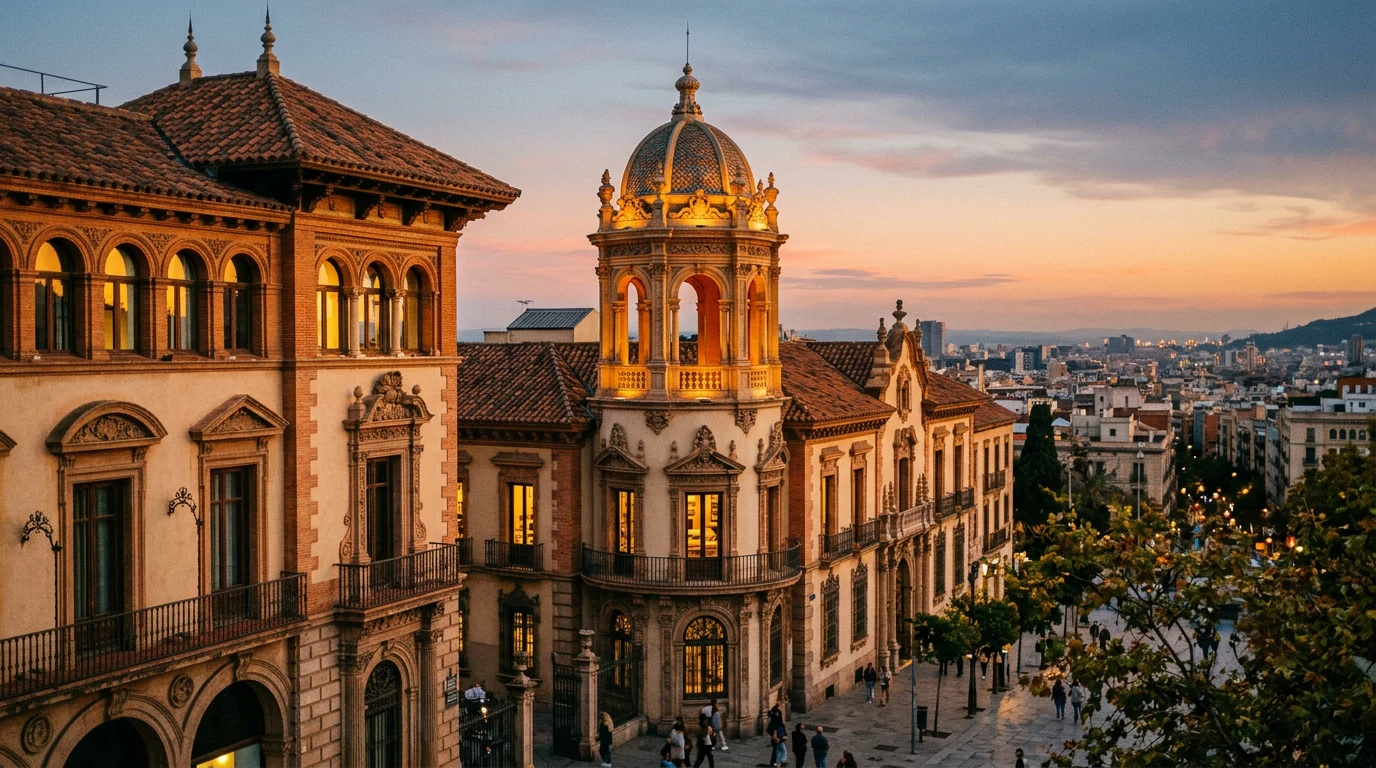
Almost nothing, twice. In Seville, the day after close to a hundred heretics have been burned, Christ appears, is recognized by the crowd and arrested at the cardinal's nod. That night the Grand Inquisitor comes to the cell and delivers a long accusation to a prisoner who never speaks. The drama is one monologue, one silence, one gesture.
Ivan calls the piece a poem, though it has no verse; that word matters. His Inquisitor is nearly ninety; Ivan himself is twenty-three, he has just walked out of his brother's monastery precincts, and he narrates with the swagger and the shakiness of a clever young man building a case he half-hopes to lose. Dostoevsky framed the chapter deliberately: it is preceded by “Rebellion,” in which Ivan catalogs, flatly, the torture of children and returns his ticket to a harmony purchased at that price. The Inquisitor is what that refusal looks like when it is given a story, a stage and an opponent who will not argue back.
What Are the Three Temptations?
The Inquisitor's speech rereads the three temptations in the wilderness (Matthew 4): stones into bread, the leap from the temple pinnacle, the kingdoms of the world. In his telling each was an offer Christ should have accepted, because each answered a human need — food, proof, rule — and each refusal loaded a burden onto ordinary people.
When Christ declined to turn stones into bread, he was choosing freedom: mankind would follow ideas, not bread. The Inquisitor's church, he says, has spent centuries correcting that work, giving people bread, miracle and authority instead. The heart of the argument is the first temptation, and its logic is uncomfortably secular. The Inquisitor does not deny God; he argues that the mass of mankind cannot live with the freedom Christ insisted on, and that a wise institution has no right to demand it of them. Better fed, ruled and consoled than free and undone. The second and third temptations follow as corollaries — mystery compelling belief, authority compelling obedience — and the old man's final, quiet admission is that in this the church has sided with “the wise and dreadful spirit” of the wilderness rather than with the prisoner. It is an argument about institutions, not about faith alone; readers have applied it to every ideology that ever promised security in exchange for obedience.
What Does the Kiss Mean?
It is the only answer, and it is not an argument. Christ says nothing; when the Inquisitor finishes, Christ kisses him on the bloodless aged lips. The old man shudders and opens the door — go, and never come back — yet the kiss burns in his heart, while he remains, the narrator specifies, with his idea.
Nothing is refuted; something is planted. The scene then repeats one remove closer to the reader. Alyosha, who has listened silently throughout, leans over and kisses his brother — and Ivan, breaking off angrily, calls it plagiarism of his poem. The gesture travels from the legendary Seville into a tavern in a Russian provincial town, which is the chapter's quiet claim: the answer to the Inquisitor is not a counter-argument but a person. Readers are free to find that moving or insufficient; Dostoevsky lets the tension stand, and only in the next book, on the life of the elder Zosima, does the novel begin its answer at length.
How Should You Read It Without a Sermon?
As Ivan's text, not the author's. Dostoevsky was a believing Christian who nevertheless gave his strongest pages to the opposition; the chapter works precisely because the Inquisitor is not a straw man, and Ivan's grief is not mocked. Believers and atheists have quoted it ever since, for opposite reasons.
Practically: read “Rebellion” first, then “The Grand Inquisitor,” in any translation. Without faith, the chapter reads as one of the great statements of the case that people prefer security to freedom; with faith, notice that it never answers the suffering argued in “Rebellion” — it only sets the terms. Garnett's 1912 English is brisk and Victorian; Pevear and Volokhonsky's 1990 is closer to the Russian's repetitions. Resist the parlor game of deciding who “really” is the Inquisitor; every generation supplies a new candidate, which is the surest sign the chapter is doing its work. And let the ending stay unresolved. The kiss is not a proof. It is the novel declining to argue, in the one place where argument would be cheap.
Frequently Asked Questions
Brief answers to the questions readers most often bring to the chapter: who the Inquisitor is, whether Dostoevsky endorsed him, whether the chapter stands alone, and which English translation to choose. Each repeats a point developed above. Nothing here requires the rest of the novel to be useful.
Is the Grand Inquisitor the devil?
No — he is a cardinal of the Inquisition, an old man who believes the church wisely reversed Christ's work. He does say the church has followed “the wise and dreadful spirit,” meaning the tempter, and that admission is the darkest line in the chapter.
Did Dostoevsky agree with the Inquisitor?
No. But he built the case as strongly as he could, through the mouth of a grieving young skeptic, and answered it only obliquely, across the rest of the novel. The chapter's power depends on the argument being allowed to win on points.
Can I read the chapter on its own?
Yes, and many people do. It is self-contained as a story; but it gains enormously from the preceding chapter, “Rebellion,” which explains what Ivan is actually refusing, and from knowing that a reply begins in the next book.
Which translation should I read?
Either Constance Garnett's 1912 version or the Pevear–Volokhonsky translation of 1990. Garnett reads faster; Pevear and Volokhonsky keep more of the original's rhythm. The chapter comes through whole in both.