The Book of Common Prayer, first issued in 1549 and compiled by Archbishop Thomas Cranmer, put the church's cycle of services into one English book. Generations heard it rather than read it, so its cadences — “till death us do part,” “ashes to ashes, dust to dust” — became the shared meter of English solemnity, and literature inherited them.
Where Did the 1549 Book Come From?
From a political window. Henry VIII died in 1547; under the boy-king Edward VI, Cranmer compressed the Latin service books — above all the Use of Salisbury, the “Sarum” rite — into a single English order, imposed by the Act of Uniformity of 1549, borrowing freely from reformed orders off Continental presses.
A committee product under one dominating ear, the book's arrival was not gentle. In the summer of 1549, rising in Devon and Cornwall against the new English service and its enforcement, crowds were put down by government forces at heavy cost — the episode remembered as the Prayer Book Rebellion. A sharper Protestant revision followed in 1552; Elizabeth I's settlement produced the 1559 book; and the revision of 1662 became the classic text, still the Church of England's official standard liturgy. Each version shows the same method: ancient structure, trimmed doctrine, and sentences built to be said in one breath.
Why Do Writers Keep Quoting It?
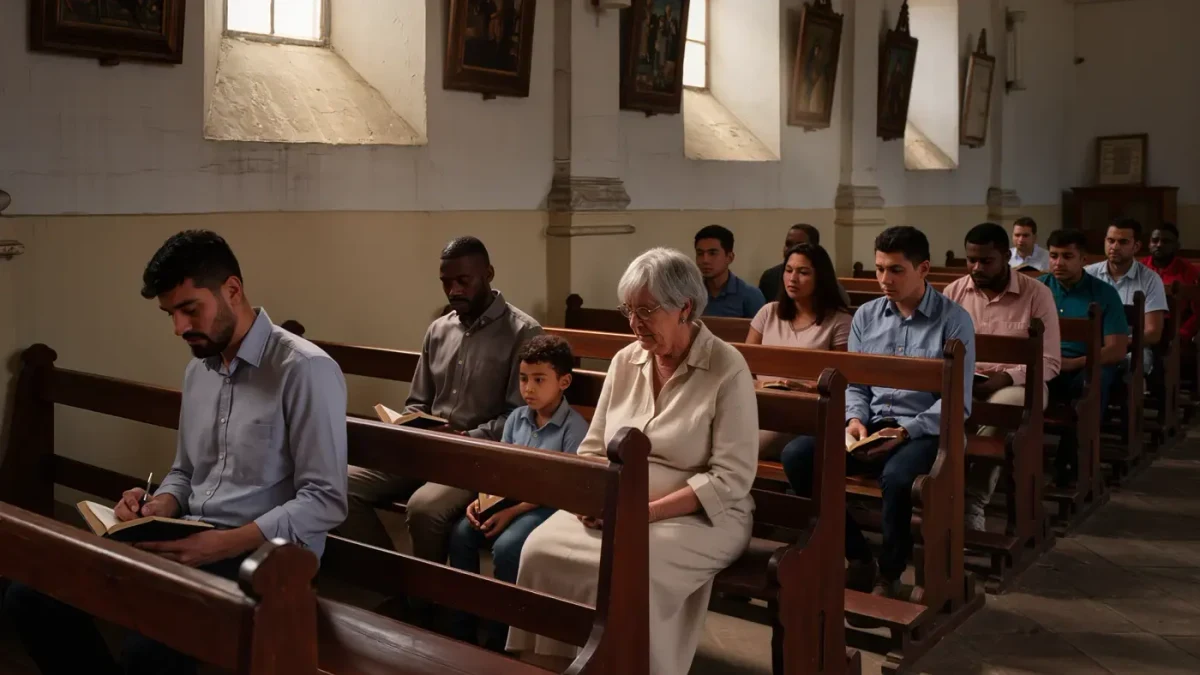
Because for centuries it was the most consistently heard prose in the language: said or sung week after week in every parish of England and much of the English-speaking world, its balanced clauses entered the national ear as scripture once had — homegrown, anonymous by design. Even readers who never entered a church met it at weddings and funerals.
The phrases are a commonplace book in themselves: the marriage vows of 1549 promised “for better for wurse, in sycknes and in hele” and “tyl death us depart” — “depart” then meaning part, with the familiar “do part” settling into the text by 1662; the burial rite commits the body “earth to earth, ashes to ashes, dust to dust”; one collect asks that scripture be read, marked, learned “and inwardly digested”; another prays for “all sorts and conditions of men.” Jane Austen grew up the daughter of a Hampshire rector, in a world run on this prose; W. H. Auden returned to it late in life; Hilary Mantel made Cranmer a patient, damning presence in Wolf Hall (2009); and David Bowie could title a single “Ashes to Ashes” in 1980 without explaining anything. The book supplies the language of endings, and endings are half of fiction.
What Changed in 1662 — and in America?
In England, 1662 marked the post-Restoration settlement: small revisions and added services. In America the problem was political — prayers for the king would not do in a republic — so the Episcopal Church issued its first prayer book in 1789; its current revision, the 1979 Book of Common Prayer, remains among the most-used English liturgies in the world.
The fate of the two streams is instructive. Twentieth-century revisions on both sides of the Atlantic achieved accuracy and inclusiveness, and lost, in exchange, a portion of the memorability — the triple rhythms and the strange subjunctives that made the old sentences stick. Writers quote 1662 almost exclusively, not from piety but because it scans. The old vow's grammar, “till death us do part,” keeps a subjunctive that modern English has otherwise shed, and the oddness is precisely what keeps the phrase audible after four hundred years of repetition.
Is It Literature or Liturgy?
Both, and the ambiguity is the point. Cranmer signed nothing; the book was issued as the church's voice, meant to disappear into congregations the way a script disappears into actors. Prose composed to be performed aloud, memorized and attributed to no one is the opposite of the authored text — which is why its afterlife looks as it does.
Calling it an influence on English literature is therefore true but slightly beside the matter. It is closer to a shared temperature. When a novelist needs a sentence that a roomful of characters would all know, a phrase that carries the weight of every funeral they have attended, the prayer book is where the hand reaches — not because the novelist believes it, but because the characters, and the readers, cannot help knowing how it goes. It hums under English the way a pedal note hums under a hymn.
Frequently Asked Questions
Short answers to the questions that arrive most often: authorship, present use, the American book, the grammar of the vows, and the book's confessional character. Each repeats, briefly, a point made above. They are practical questions, and the answers are practical.
Who wrote the Book of Common Prayer?
Archbishop Thomas Cranmer is credited with the chief compilation of 1549, working with bishops and divines under royal authority. It was a collaborative book issued in the church's name; no author appears on the title page.
Is the 1662 book still used?
Yes. It remains the Church of England's official standard of doctrine and worship, and a minority of parishes use it exclusively; modern common worship exists alongside it rather than replacing it legally.
What is the American prayer book?
The Episcopal Church's Book of Common Prayer, first issued in 1789 after independence and revised in 1928 and 1979. The 1979 volume is the current authorized version, containing both contemporary and traditional-language rites.
Why does the vow say “till death us do part”?
It preserves an English subjunctive: “us do part” means “until death part us.” The 1549 wording was “till death us depart,” where “depart” meant separate; the familiar form settled by 1662 and stayed.