An icon is a panel painted for veneration within Orthodox liturgy; its conventions — gold ground, frontal figures, flattened space — are statements about what is depicted, not decoration. Andrei Rublev’s Trinity, painted in the early fifteenth century for the monastery at Sergiev Posad and now in Moscow’s Tretyakov Gallery, compresses the language into three angels at a table.
Why Isn’t an Icon Simply a Painting?
Because it was not made to be looked at the way gallery pictures are. An icon is one element in a working system: it hangs on or stands before the iconostasis, the screen of images that orders an Orthodox church; it is kissed, incensed, carried in procession, and darkened by candle smoke and touching oil. The painter worked within an inherited pattern — in Orthodox usage, a copy of a venerated model — and in Slavic languages the verb for making one is the verb for writing. English borrowed the habit: icons are “written,” and much of the surface is indeed lettering, abbreviation and inscription.
What Is the Grammar of the Image?
A few conventions carry most of the meaning. Figures face outward, meeting the viewer’s gaze rather than pursuing a story among themselves. Scale follows importance, not distance: a saint is large because of rank in the heavenly order, and a diminutive donor at the base is small because he asked to be. Perspective runs the “wrong” way — building lines and thrones splay outward so that the vanishing point sits, in effect, in the viewer standing before the panel. The space opens toward you; you complete it.
Gold does the rest. It is not a background but a field: a surface that catches real light and casts no shadow of its own, standing for the uncreated light the icon addresses. Inscriptions fix identity — abbreviated names, the hand of blessing, the cross — because in this tradition the name is part of the image; without the letters, the panel is unfinished. Time also folds: several moments of a narrative can coexist on one panel, since what is shown is meaning rather than an instant.
What Is It Made Of?
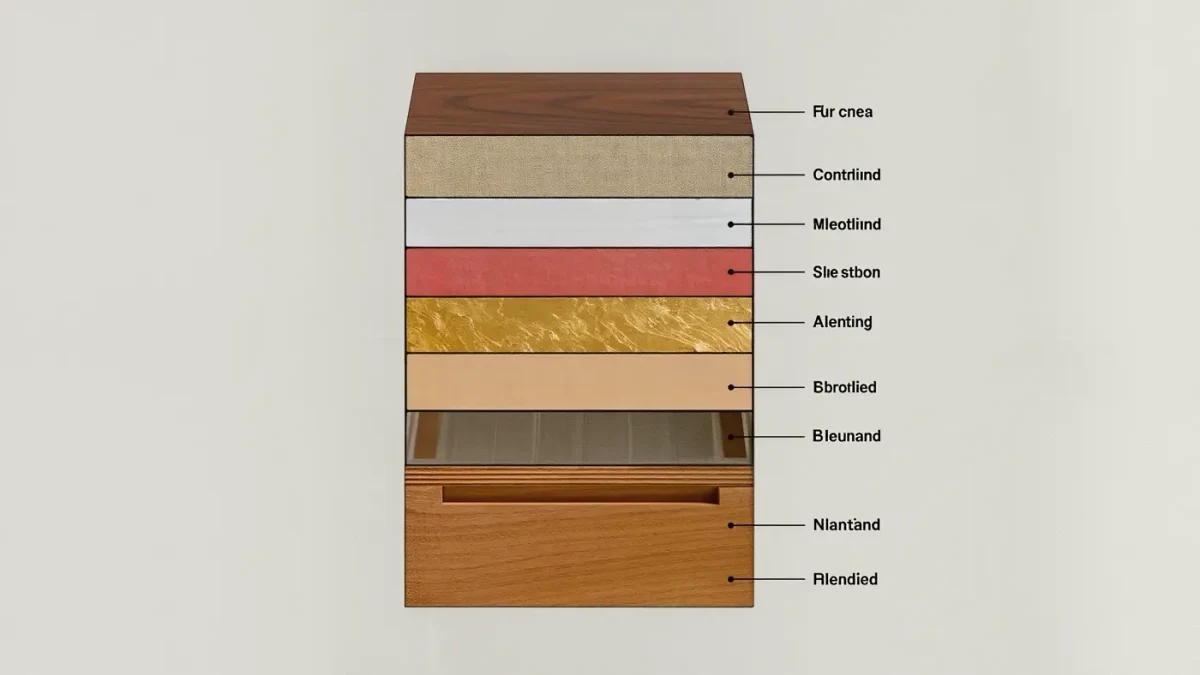
Labor, mostly, in layers. A hardwood panel — lime in Russia, often oak elsewhere — is hollowed slightly in its central field, the recess known in Russian as the kovcheg, or ark. Over the wood goes linen, then levkas, a white gesso of chalk and animal glue, sanded to ivory smoothness. The painter works in egg tempera, building flesh in thin veils from dark to light; gold leaf is laid on a red clay bole and burnished, its engraved rays called the assist. A final coat of drying oil, the olifa, protected the surface and is the reason so many old icons read sepia today — it darkens irreversibly with age. Western workshop practice, recorded by Cennino Cennini around 1400, describes the same gesso-and-tempera economy; the difference lies less in technique than in what the finished object was for.
Does the School Matter — Russian, Greek, Cretan?
It shapes what you will see, without changing the grammar. Byzantium supplies the parent tradition after iconoclasm ended in 843; after 1453, Greek and above all Cretan workshops served both Orthodox and Latin patrons — the Cretan school could supply a Madonna in Byzantine formula or a Madonna in Italian taste, and El Greco trained in exactly that trade before leaving Crete for Venice. In Russia, regional voices hardened into schools: Novgorod’s firm outlines and plain color, Moscow’s lyrical harmony in the Rublev circle, the miniature refinement of the sixteenth-century Stroganov workshops. In museums, most icons hang as fragments of dismantled iconostases — remember the lost screen.
What Should You Read Before Looking Again?
Two books carry a beginner far. Leonid Ouspensky and Vladimir Lossky’s The Meaning of Icons (1952; English edition 1982) pairs theology with plates and remains the classic introduction from inside the tradition. Robin Cormack’s Painting the Soul (1997) is the art-historical counterweight — Byzantine images read as objects with makers, politics and viewers. Between them lies the honest position: an icon is fully described by neither devotion nor scholarship alone.
Frequently Asked Questions
Why is an icon “written” rather than painted?
Because Slavic languages use the verb “to write” for making them, and English adopted the calque. The habit also reflects the weight the tradition gives to inscriptions and models over invention.
Why gold rather than a painted setting?
Gold is a field, not scenery: it catches real light, casts none of its own, and stands for the uncreated light in which the figures are held.
Why do figures face outward?
The image is addressed to the person standing before it. Frontality, halo and gaze are what make veneration possible; the viewer stands where Western perspective would put its vanishing point.
What is an oklad?
A metal cover — silver or gilt, worked in repoussé — laid over the painted panel to protect and honor it, usually leaving the face and hands exposed. Many icons in museums wear, or have lost, one.
Can icons be shown in museums respectfully?
They are, routinely — best when the label gives the liturgical context and the museum keeps the object whole. What a museum cannot supply is the candle soot, the kissing and the feast day; that part of the meaning stays in the church.