You start a modest art collection the way you start any long relationship: slowly, and with money you can afford to lose the argument over. The first purchase should be a work you want to live with, not a work you expect to flip. Buy because you looked at it every day for a week and still wanted to look again.
The practical entry points are prints, photography editions, works on paper, and small originals from emerging artists. Galleries, art fairs, and graduate exhibitions all sell them. What follows is how the market actually works at the low end, where the price gap between a print and a painting can run from tens to thousands, and how to tell quality from decoration. Readers following this should also see Why Museums Rehang Their Collections.
According to the Cambridge Dictionary, to start is simply "to begin" — and the dictionary's business section notes that ticket prices "start at" a figure and climb. That is exactly the shape of the art market: every category has a floor, and the floor is lower than most people assume. The skill is learning what sits above the floor and why.
What should you buy first?
Buy paper. Prints, drawings, photographs, and small watercolors carry the lowest prices in any artist's work, because editions multiply a single image and paper costs less to make and frame than canvas. A signed editioned print is a real artwork, not a poster; the difference is the artist's hand in the making and the finite number in existence.
Ask two questions before any purchase: how large is the edition, and is it signed and numbered? An edition of thirty is a different object from an edition of three thousand. Unnumbered open editions, however handsome, function as decoration. There is nothing wrong with decoration, but it is honest to know which one you are buying.
Where do first-time buyers actually shop?
Three places, in rough order of price. Graduate and degree shows, where work is often the cheapest an artist will ever sell and you get to meet the maker. Commercial galleries, where the staff expect questions and the good ones answer them without condescension. And art fairs, which compress hundreds of galleries into one hall — exhausting, but useful for training your eye fast, because you can compare a hundred booths in an afternoon.
Online sales platforms and museum print sales belong on the list too. Museum benefit sales, in particular, pair vetted quality with prices set to move, since the institution wants both the artist and the buyer to feel well served.
How much should a first piece cost?
No honest source fixes a number, so treat any universal figure with suspicion. What can be said plainly: set an annual budget you would spend on a decent sofa, and treat it as spent the moment you commit. Frames, shipping, and insurance are real costs that arrive after the invoice. A common beginner's error is spending the whole budget on the object and having nothing left to protect or hang it.
One structural fact helps more than any figure: prices are usually negotiable at galleries, politely, and especially at fairs near the end of a run. Dealers rarely advertise this. Asking does not offend them; it marks you as someone who knows the trade.
What this means for quality: how do you judge before you buy?
Judge the work against its own ambition, not against a checklist. Stand in front of it and ask what it is trying to do, and whether it does that. A modest still life that fully achieves a modest aim outlasts an ambitious failure. Condition matters more at the low end than beginners expect — foxing on old paper, fading, creases — because restoration costs more than the repair is worth.
Provenance, the record of who owned a work, becomes important the moment value appears. Buy with an invoice, keep it, and keep any correspondence with the gallery. The art world runs on paper trails; collectors who keep them spare themselves grief later. The stakes of documentation are visible at the high end, where a manuscript's ownership history can decide a sale outright, as our reporting on a looted medieval prayer book sold at auction makes plain. Your print will never carry that history, and that is the point: start the trail clean.
Our analysis, after years on the buying side of this market: the collectors who build something coherent are the ones who follow artists rather than categories. Three works by one emerging artist, bought over two years, tell a story. Twelve unrelated bargains tell a storage problem.
How does a collection grow without turning into hoarding?
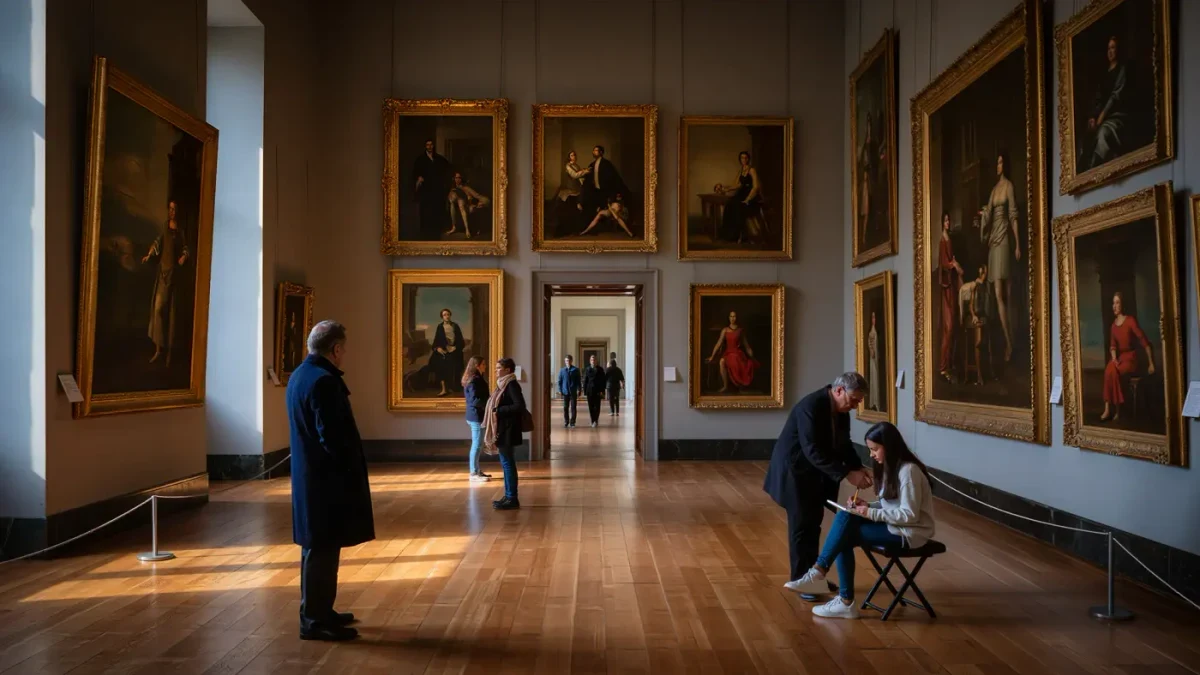
Slowly, and on purpose. Revisit your walls every few months; sell or give away what has stopped earning its place. Read the paperwork on every piece — the edition number, the printer, the publisher — the way a serious reader reads a translator's notes: the apparatus is part of the pleasure. And keep looking at art you cannot afford. Museums rehang their rooms for a reason, and the habit of looking is the only part of collecting that never depreciates. We covered a connected angle in Why Museums Keep Sacred Art.
What the evidence of the trade establishes is this: the floor is low, the paperwork matters, and taste is trainable. What remains unknown is which young artist will matter in twenty years — nobody knows that, including the dealers. Collect accordingly: buy what you love at prices you can defend, and let the rest take care of itself.