A Gothic window is read from the bottom upward, with donors at your feet and last things at your head. The three west lancets of Chartres Cathedral, glazed around 1150 and survivors of the 1194 fire, already show the complete system: narrative sequence, typological pairing and naming inscriptions.
What Are You Actually Looking At?
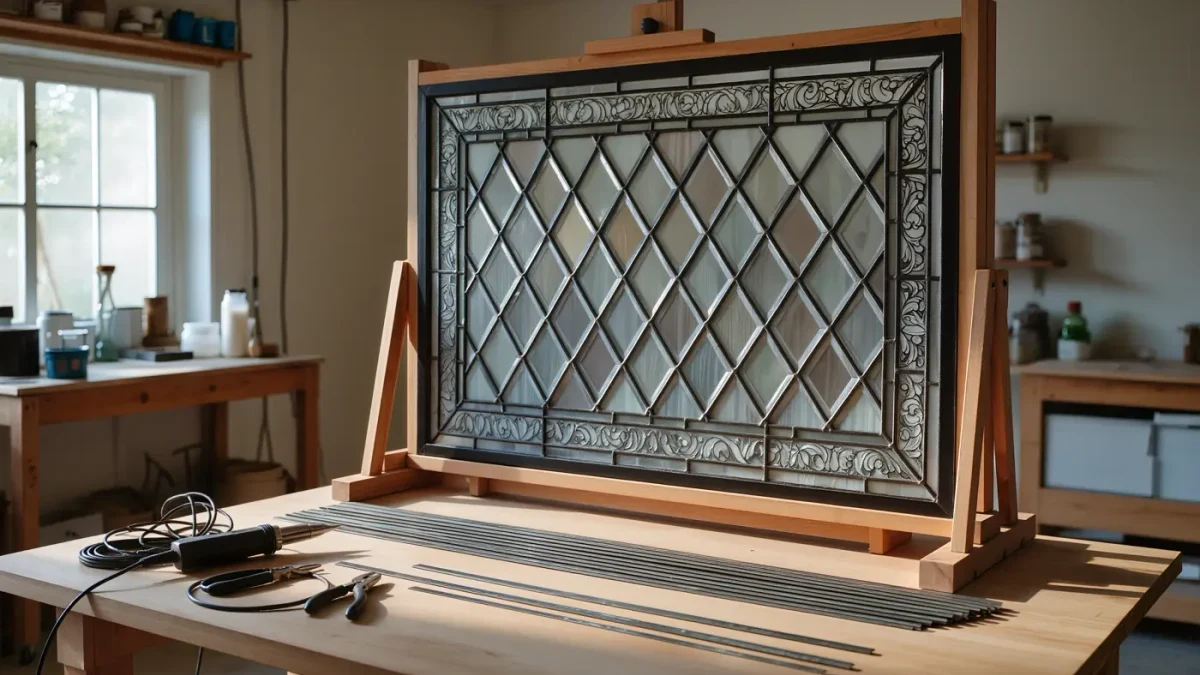
Not one translucent picture but a lattice. A window is assembled from pieces of colored glass — the color often in the metal of the glass itself, cobalt for the blues Chartres is famous for, copper for ruby red — each cut and joined inside lead cames, the H-sectioned strips that form the black web of the design. Details that could not be cut are painted: trace lines and shading in a brown glass-paint, fired onto the surface so it fuses permanently. A later technique, silver stain — a silver compound painted on and fired — turned clear glass every shade of yellow, and gave the medium its modern name. Grisaille, monochrome paint over pale lattice, made the silvery windows that flooded Cistercian and later churches with light while shutting out figuration.
How Is a Window Organized?
In bands and roundels, mostly. The thirteenth-century nave windows at Chartres stack rows of medallions, each a self-contained scene; you read a lancet the way you climb a ladder, and sometimes the direction alternates from row to row. Inscriptions unfurl from scrolls or settle in borders, naming figures whose stylized attributes — keys, a wheel, a lamb — identify them faster than any face.
Typology is the great organizing idea: Old Testament scenes set directly beneath their New Testament fulfillments, so that the window teaches the relation between the testaments in a single vertical glance. Canterbury Cathedral preserves a famous group of late twelfth-century typological windows in its choir, made for an audience assumed to be literate in this system and nothing else. The rose windows crown it: at Chartres the north rose gathers Old Testament kings and prophets around the Virgin, while the south rose is an Apocalypse, with the symbols of the four evangelists ringing a central Christ in majesty.
Who Are the People at the Bottom?
The ones who paid. In the base panels of the thirteenth-century glazing at Chartres, donors appear at work: butchers at their block, bakers at their peel, shoemakers, drapers, money-changers at their counters, alongside kings, counts and canons. The glazing of the rebuilt cathedral after the 1194 fire was financed to a remarkable degree by trade guilds and civic corporations, and the windows doubled as a ledger of the city’s working names. Donor panels elsewhere show kneeling couples, armored knights, abbots with croziers — a window was a donation before it was an image, and the bottom register is where the account was settled.
What Has Time Done to the Glass?
Everything, repeatedly. Panes have been replaced since the Middle Ages; eighteenth- and nineteenth-century restorers re-leaded and re-invented freely; and in 1939 the windows of Chartres, and much of France’s and England’s glazing besides, were taken out pane by pane and stored against bombardment — Canterbury’s medieval glass survived the war in crates while the building above it burned. Modern conservation is chastely minimal: corroded surfaces are cleaned rather than repainted, and protective isothermal glazing is argued over case by case. Sainte-Chapelle in Paris, glazed in the 1240s for Louis IX’s palace chapel, carries more than a thousand scenes across its fifteen windows and remains the single densest argument that glass could replace wall.
Frequently Asked Questions
Reader questions about technique and survival, answered briefly.
Why is it called “stained” glass?
Technically, for silver stain, the fired compound that turns glass yellow; the name spread to the whole medium, though most color in medieval windows was in the glass itself, not applied to it.
Who are the small figures at the bottom of the windows?
Donors — guilds at Chartres shown at their trades, elsewhere knights, clergy and couples — commemorated where the money entered the building.
Why read from the bottom up?
Because that is how the programs were built: donors and foundations at the base, narrative rising, crowning images of judgment or glory at the top. Height in the window follows weight in the meaning.
Did they really remove the glass before the war?
Yes. From 1939, windows at Chartres, Canterbury and elsewhere were dismantled and crated; most returned in the later 1940s, sometimes after damage and debate.