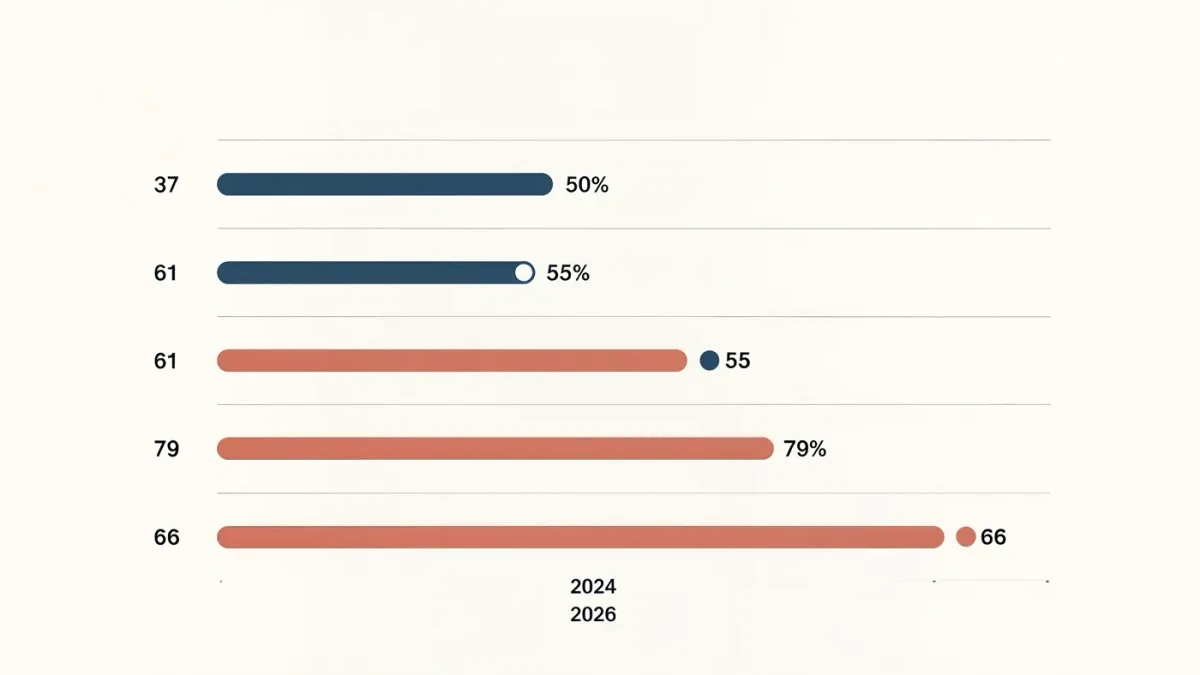
Thirty-seven percent of American adults say religion is gaining influence in American life — the highest reading since 2002 — according to a Pew Research Center report published May 14, 2026. Yet in the same survey, 79 percent said houses of worship should not endorse political candidates, and 66 percent said churches should keep out of political matters altogether.
The findings come from Pew's American Trends Panel: 3,592 U.S. adults surveyed April 6 through 12, 2026, with a margin of error of plus or minus 1.9 percentage points. The panel's probability design — its participants are recruited to represent the adult population rather than self-selecting — is why a difference of a few points between readings is treated as real movement.
Perception and preference are moving on separate tracks. The share seeing religion's influence rising climbed 19 points in two years, while 61 percent still say religion is losing influence. Views of religion's effect on American life net out positive: 55 percent hold a positive view, up from 49 percent in 2022, against 22 percent negative.
The report's most contested term, Christian nationalism, is becoming better known without becoming better liked. Fifty-nine percent of adults have heard at least a little about it, up from 45 percent in 2024. Among them, 10 percent view it favorably, 31 percent unfavorably, and a majority of the country offers no opinion at all — though support for declaring Christianity the official religion of the United States rose from 13 percent in 2024 to 17 percent.
Partisanship structures nearly every number. Seventy-five percent of Republicans view religion's influence positively, against 38 percent of Democrats; 45 percent of Republicans say the Bible should outweigh the will of the people when the two conflict, against 13 percent of Democrats. On one question the parties converge: majorities of both — 74 percent of Republicans, 84 percent of Democrats — say churches should not endorse candidates.
Why this matters to readers who track institutions rather than campaigns: the survey is a measure of pressure. Rising perceived influence, a narrowing but hardening partisan split on religion's public role, and durable cross-partisan support for the endorsement ban together describe the environment in which congregations, denominational offices and courts will negotiate tax status, school boards and holiday displays through the rest of the decade. The numbers do not say religion is entering politics; they say Americans increasingly believe it is, and mostly wish it were not.